


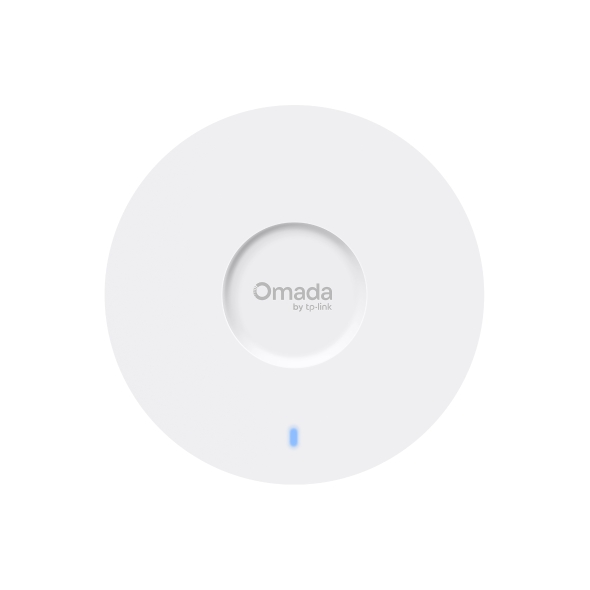
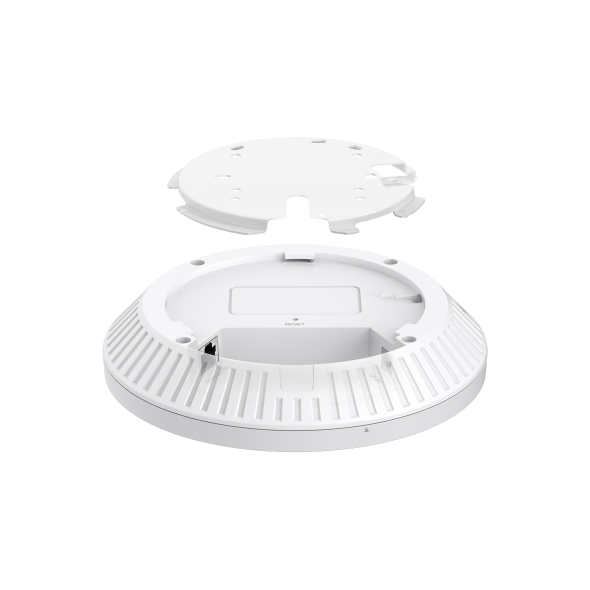
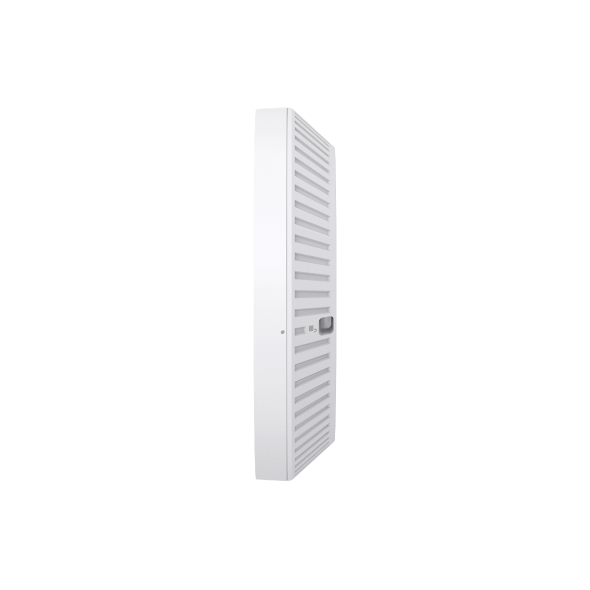
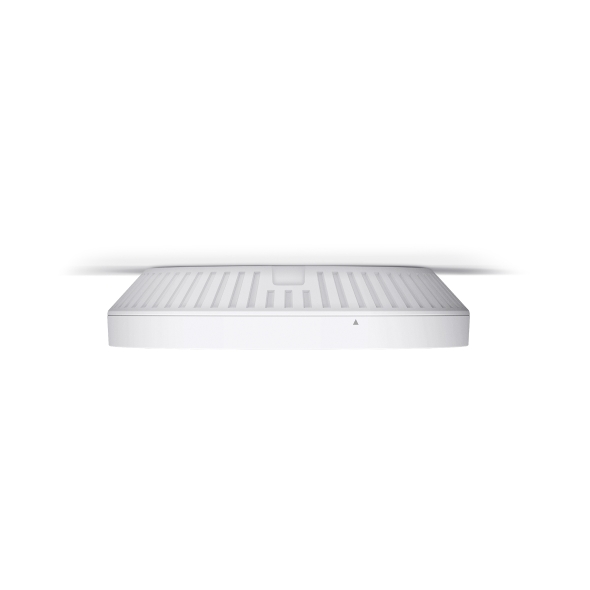
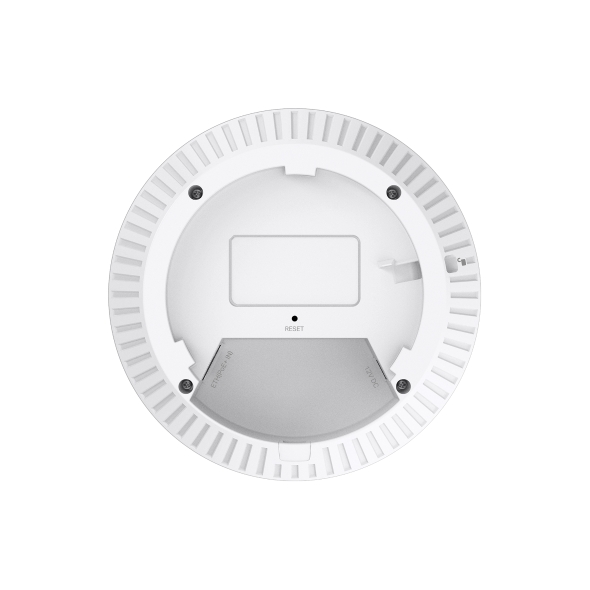
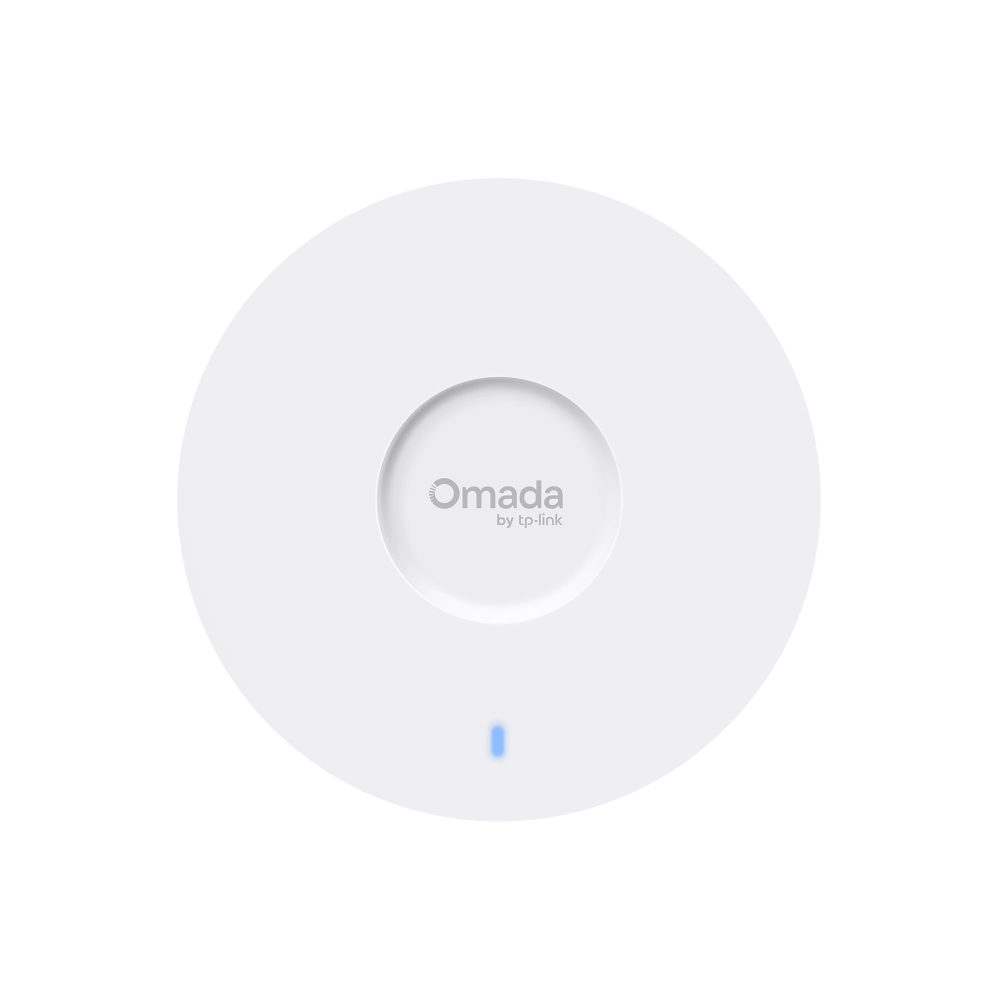
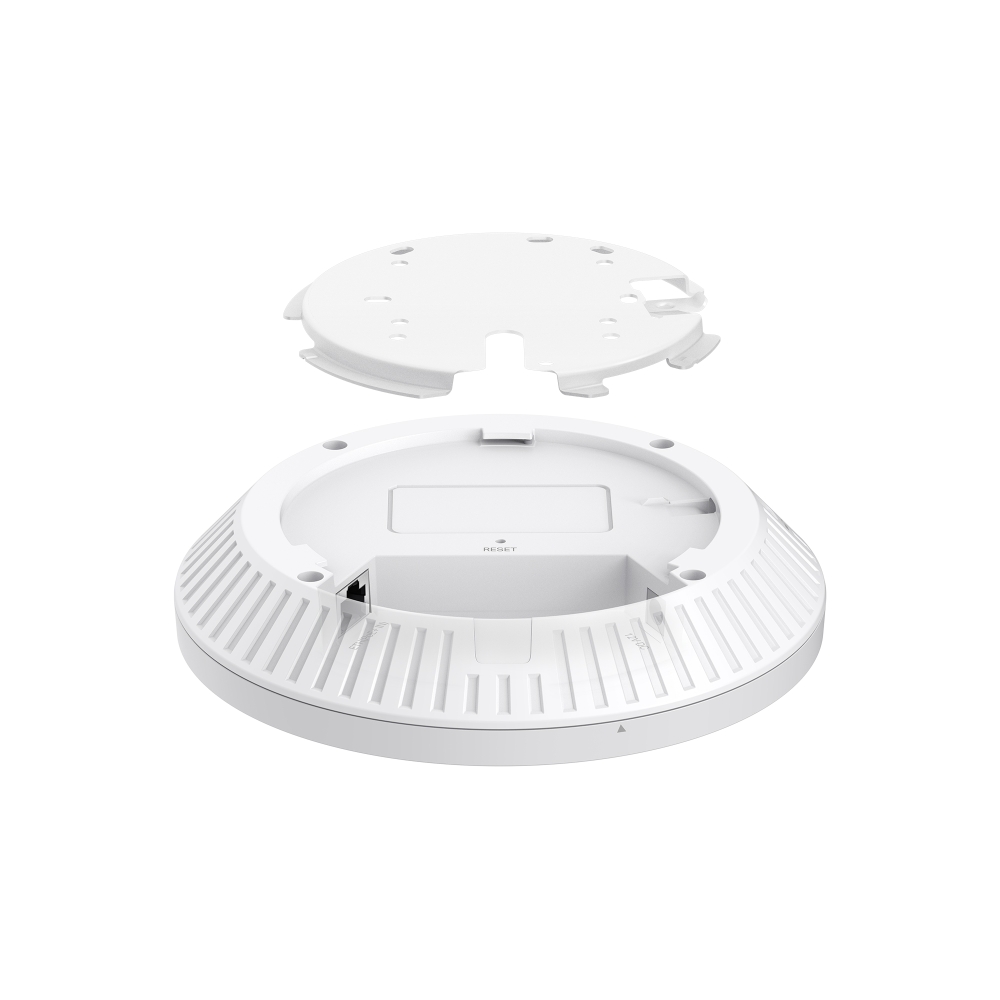
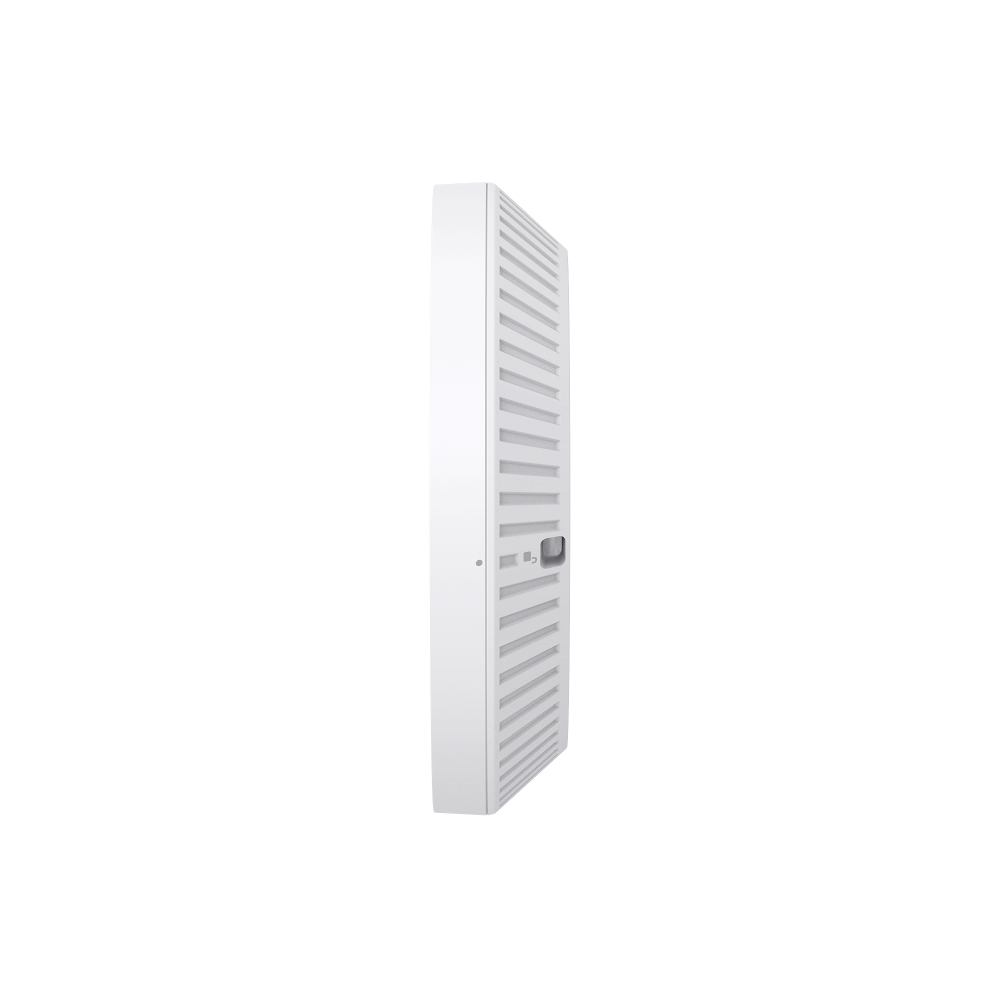
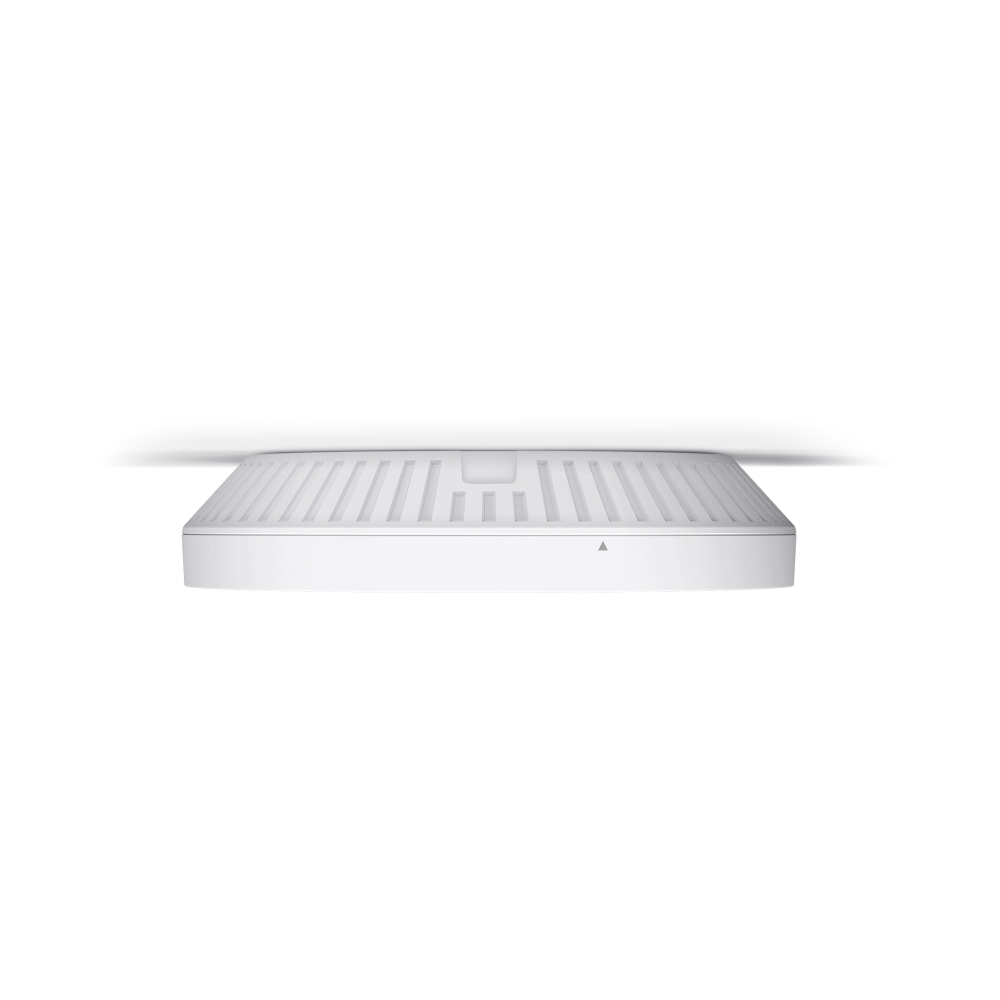
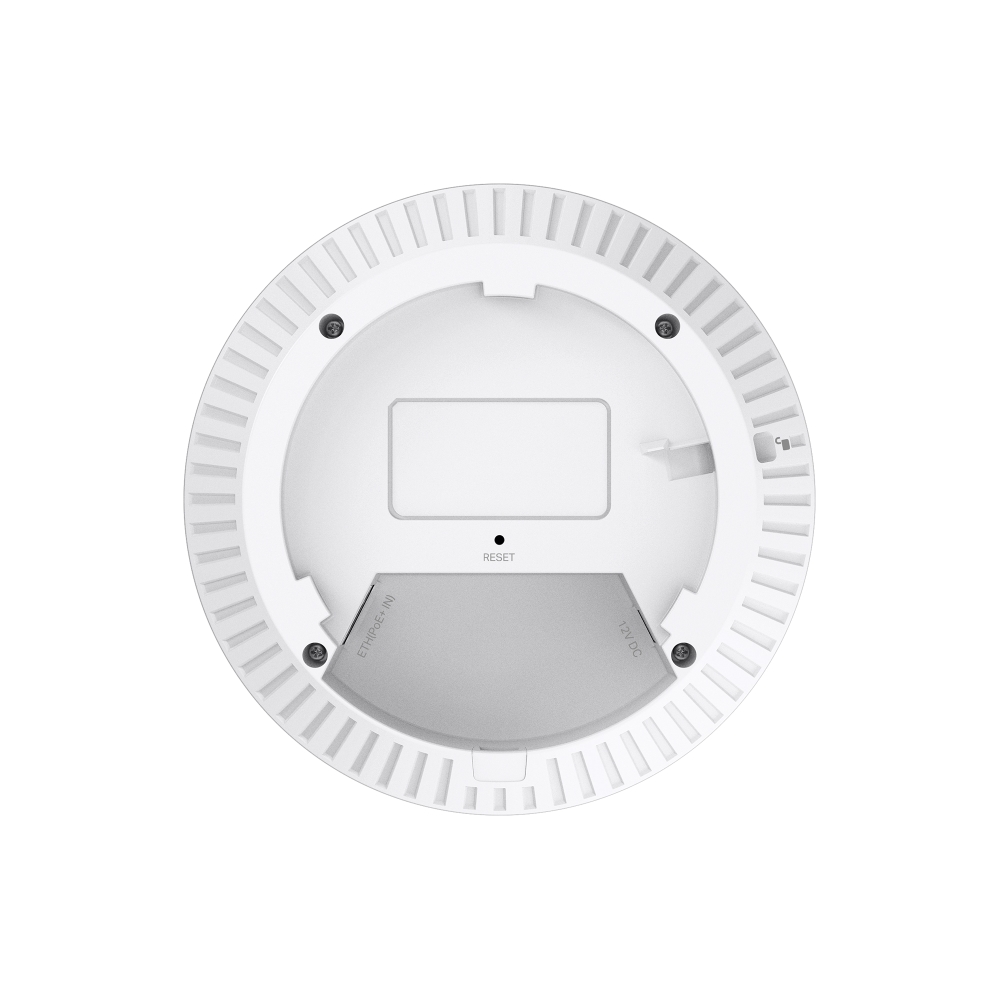
EAP650
AX3000 Ceiling Mount WiFi 6 Access Point
- Dual-Band Wi-Fi 6: 2,402 Mbps on 5 GHz, and 574 Mbps on 2.4 GHz†
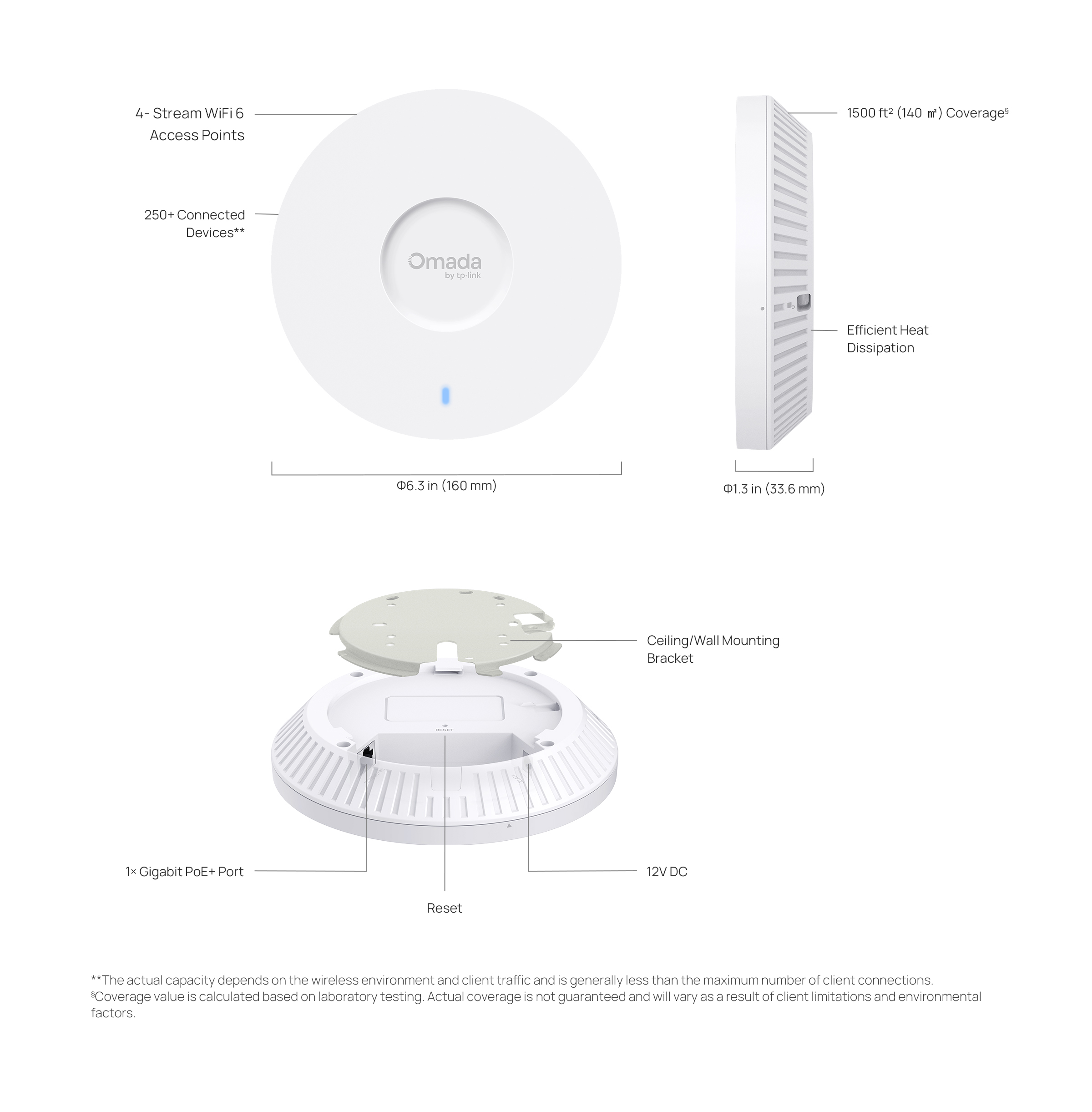
- 1× Gigabit Port: Ensures fast connectivity throughout the network.
- Low Latency and Interference: MU-MIMO, OFDMA, and 1024-QAM ensure high performance for your network.‡
- Flexible Deployment and Easy Setup: Supports both 802.3at PoE and DC Power supply for flexible installation. Omada SDN for one-click setup.
- Advanced Features: Supports centralized cloud management, Mesh, and Seamless Roaming.△
- More Connections and Wider Coverage: Supports 250+ concurrent clients** and covers up to 1500 ft² (140 ㎡)* for reliable and extensive wireless connectivity.
Learn more about Omada Cloud SDN>

| HARDWARE FEATURES | |
|---|---|
| Interface | 1× Gigabit Ethernet Port |
| Button | Reset |
| Power Supply | • 802.3at PoE• 12V DC (Power Adapter included)(EU Version: 12 V / 1.0 A DC. US Version: 12 V / 1.5 A DC)• 48V Passive PoE |
| Max. Power Consumption | • EU: 13.5 W• US: 14.7 W |
| Dimensions ( W x D x H ) | 6.3 × 6.3 × 1.3 in (160 × 160 × 33.6 mm) |
| Antenna | Internal Dual-Band Antennas• 2.4 GHz: 2× 4 dBi• 5 GHz: 2× 5 dBi |
| Mounting | • Ceiling /Wall Mounting (Kits included)• Junction Box Mounting |
| WIRELESS FEATURES | |
|---|---|
| Wireless Standards | IEEE 802.11ax/ac/n/g/b/a |
| Frequency | 2.4 GHz and 5 GHz |
| Signal Rate | • 5 GHz: Up to 2402 Mbps• 2.4 GHz: Up to 574 Mbps |
| Wireless Functions | • 1024-QAM• 4× Longer OFDM Symbol• OFDMA• Multiple SSIDs (Up to 16 SSIDs, 8 for each band)• Enable/Disable Wireless Radio• Automatic Channel Assignment• Transmit Power Control (Adjust Transmit Power on dBm)• QoS(WMM)• MU-MIMO • HE160 (160 MHz Bandwidth)‡• Seamless Roaming §• Omada Mesh§• Band Steering• Load Balance• Airtime Fairness • Beamforming• Rate Limit• Reboot Schedule• Wireless Schedule• Wireless Statistics based on SSID/AP/Client |
| Wireless Security | • Captive Portal Authentication§• Access Control• Wireless Mac Address Filtering• Wireless Isolation Between Clients• SSID to VLAN Mapping• Rogue AP Detection• 802.1X Support• WPA-Personal/Enterprise, WPA2-Personal/Enterprise, WPA3-Personal/Enterprise |
| Transmission Power | • CE:7-20 dBm(2.4 GHz, EIRP)7-23 dBm5 GHz, U-NII-1, U-NII-2A, EIRP)7-30 dBm(5 GHz, U-NII-2C, EIRP)• FCC:4-25 dBm (2.4 GHz)4-25 dBm (5 GHz, U-NII-1, U-NII-2A, U-NII-2C, U-NII-3) |
| Management Features | |
|---|---|
| Omada App | Yes |
| Centralized Management | • Omada Cloud-Based Controller• Omada Hardware Controller• Omada Software Controller |
| Cloud Access | Yes. Require the use of an Omada controller. |
| Email Alerts | Yes |
| LED ON/OFF Control | Yes |
| Management MAC Access Control | Yes |
| SNMP | v1, v2c, v3 |
| System Logging Local/Remote Syslog | Local/Remote Syslog |
| SSH | Yes |
| Web-based Management | HTTP/HTTPS |
| L3 Management | Yes |
| Multi-site Management | Yes |
| Management VLAN | Yes |
| Zero-Touch Provisioning | Yes. Requiring the use of Omada Cloud-Based Controller. |
| OTHERS | |
|---|---|
| Certification | CE, FCC, RoHS |
| Package Content | • EAP650• Power Adapter• Ceiling/Wall Mounting Kits• Installation Guide |
| System Requirements | Microsoft Windows XP, Vista, Windows 7, Windows 8, Windows10, Windows 11, Linux |
| Environment | • Operating Temperature: 0–40 ℃ (32–104 ℉)• Storage Temperature: -40–70 ℃ (-40–158 ℉)• Operating Humidity: 10–90% RH non-condensing• Storage Humidity: 5–90% RH non-condensing |
†Maximum wireless signal rates are the physical rates derived from IEEE Standard 802.11 specifications. Actual wireless data throughput, wireless coverage, and connected devices are not guaranteed and will vary as a result of internet service provider factors, network conditions, client limitations, and environmental factors, including building materials, obstacles, volume and density of traffic, and client location.
‡Use of Wi-Fi 6 (802.11ax), and features including OFDMA, MU-MIMO, and 1024-QAM requires clients to also support the corresponding features. The 160 MHz bandwidth is only available on 5 GHz band and may be unavailable in some regions/countries due to regulatory restrictions.
*Coverage value is calculated based on laboratory testing. Actual coverage is not guaranteed and will vary as a result of client limitations and environmental factors.
**The actual capacity depends on the wireless environment and client traffic and is generally less than the maximum number of client connections.
△These features require the use of an Omada controller.